Words from Director
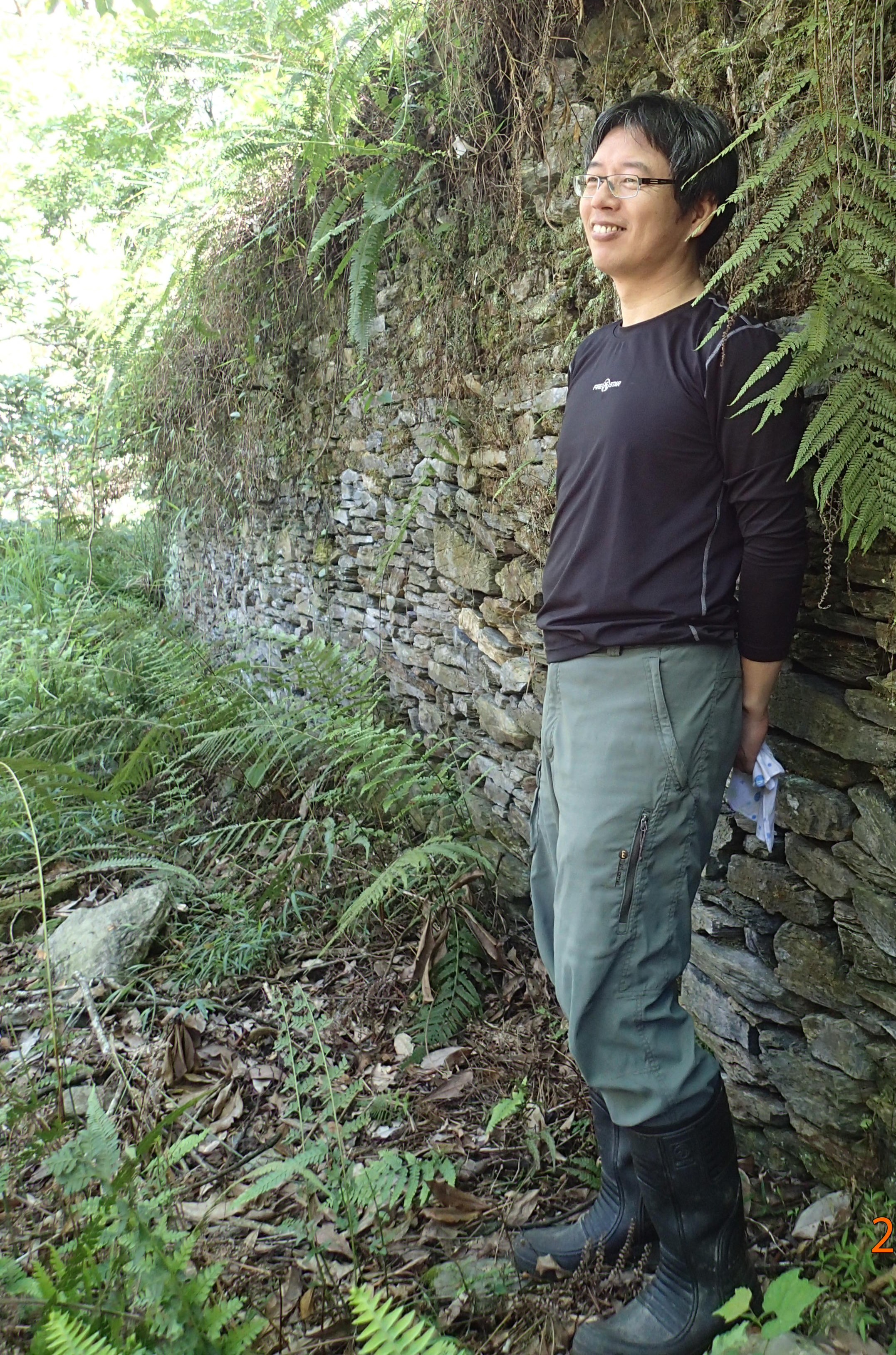
- Educational background:
Master’s Degree, Graduate Institute of Natural Resources Management, National Dong Hwa University
- Experience:
Deputy Director, Kenting National Park
Headquarters, National Park Service, Ministry of the Interior
Deputy Director and Secretary, Shei-Pa
National Park Headquarters
Section Chief, Taroko National Park
Headquarters
Senior Technical Specialist, Construction
and Planning Agency, Ministry of the Interior
Section Head, National Dong Hwa University
Section Chief and Technical Officer, Taroko
National Park Headquarters
First of all, we warmly welcome you to visit the website of Taijiang National Park. This website provides a wealth of information on tourist attractions, natural resources, environmental education, and visitor services. We invite you to make full use of these resources and help us share them with others. Furthermore, to help you understand the development of modern nature conservation, the following section reviews the history of national parks and the philosophies of key figures, while also outlining the establishment and future outlook of Taijiang National Park. Due to space limitations, this overview is necessarily brief. We hope it will inspire your interest to explore more historical materials and encourage you to become a partner in our efforts to conserve nature.
The national park system began in 1872 with the establishment of Yellowstone National Park in the United States. The concept can be traced back to British ecological poet William Wordsworth, who in 1810 proposed that “natural and beautiful places should be protected as common national assets, so that every citizen with an interest may have the right to access and appreciate them.” Later, American frontier painter George Catlin offered a visionary proposal in 1832, suggesting that if the government were to intervene with strong protective policies to safeguard Indigenous cultures and pristine natural landscapes, people would be able to enjoy this magnificent natural park forever. Naturalist and writer Henry David Thoreau devoted his life to advocating the protection of nature, simple living, and free will; his 1854 publication Walden had a profound and lasting influence. Diplomat and philologist George Perkins Marsh published Man and Nature in 1864, asserting that “the permanence of human welfare depends upon the condition in which resources are preserved.” Natural philosopher John Muir played multiple roles throughout his life, promoting the concept of “wilderness” and inspiring widespread impact. Today, rereading his words by the banks of the Zengwen River—“The rivers flow not past, but through us; thrilling, tingling, vibrating every cell and fiber of our bodies, making them glide and sing”—remains deeply moving. Thus, the establishment of national parks has been driven by people from diverse backgrounds and professions, including poets, artists, writers, philosophers, landscape architects, and linguists. This demonstrates that everyone can be an advocate for protecting land and water—and perhaps you may one day join this endeavor as well.
Taijiang National Park, like the pioneers mentioned above, was established through the collective efforts of dedicated individuals from various sectors. With the support of then-Legislator Hsu Tain-tsair, who in 2001 proposed the planning of the Sicao Wildlife Refuge as a national park during his mayoral campaign, the Tainan City Government actively advanced the proposal in 2003. In 2005, the Taijiang Park Planning Office was established at the Salt Fields Ecological and Cultural Village to communicate with local residents. In 2006, the Taijiang National Park Planning Advisory Committee was formed, creating a formal channel for local participation in the planning process. Finally, in 2009, the Executive Yuan approved the Taijiang National Park Plan. Taijiang National Park thus became Taiwan’s first national park established through a “bottom-up” approach, emphasizing coexistence with local communities, and encompassing the rich cultural, natural, and ecological landscapes of Tainan’s coastal region.
Taijiang National Park is currently Taiwan’s only wetland-type national park and serves as an internationally significant site for environmental education and conservation. Along the temporal axis, the Taijiang region encompasses a history spanning Indigenous cultures, Dutch rule, the Kingdom of Tungning, the Qing Dynasty, the Japanese colonial period, and modern times. Centered on the former Taijiang Inner Sea, the area bears witness to dramatic geographical changes and the interweaving of diverse ethnic groups, maritime trade, fisheries and salt industries, and religious beliefs. Along the spatial axis, the Taijiang region forms part of the more than 250 million hectares of over 2,400 Wetlands of International Importance designated under the Ramsar Convention worldwide. It is a vital habitat for migratory birds and provides essential ecosystem services, including flood control, water purification, and water resource conservation. These wetlands deserve collective protection so that vibrant and enduring wetland environments may be preserved for future generations to enjoy and appreciate.
To conserve diverse natural and cultural landscapes and biodiversity, Taijiang National Park will continue to follow the international “Satoumi” concept, integrating traditional fisheries and salt industries with the simple character of local communities. Through this approach, we aim to build a harmonious partnership between people and nature for sustainable development, creating opportunities for environmental education and in-depth experiences that combine wetlands, culture, and industry. Future initiatives include moderately expanding the park boundary to maintain the integrity of natural ecosystems and cultural heritage; strengthening the preservation of traditional fisheries and salt-production landscapes while promoting bird-friendly aquaculture practices; managing important wetlands by shaping ecologically cyclic spaces and applying watershed-based management concepts to effectively steward waters and wetlands; and continuously improving facilities and environments at key recreational sites to enhance their recreational and environmental education functions, thereby fostering local development and enriching visitor experiences.
Finally, we sincerely invite you to participate in community-based ecotourism or conservation activities and to support Taijiang through your actions.